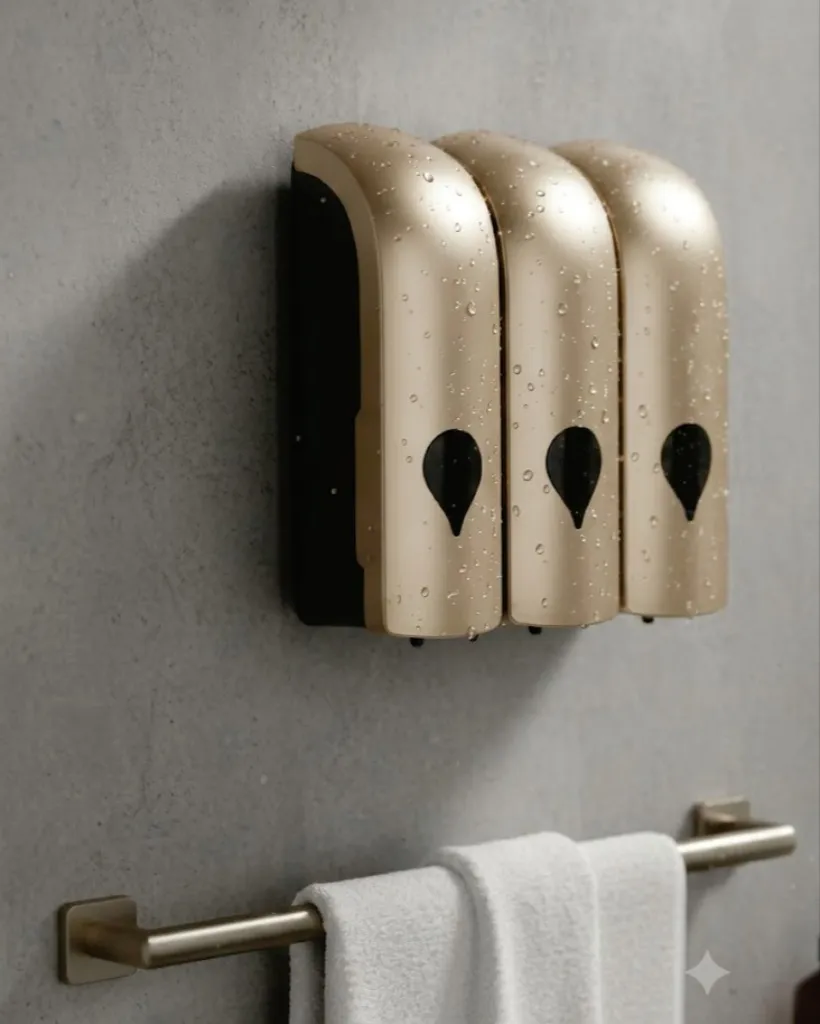
A Soap Dispenser may seem like a relatively simple washroom accessory, yet poor selection can create recurring operational problems. Insufficient capacity leads to frequent refilling, unsuitable dispensing mechanisms can create inconvenience, and difficult-to-maintain units add work for housekeeping teams.
Hotels, hospitals, corporate offices, schools, malls, restaurants, and commercial properties therefore benefit from evaluating dispensers according to actual usage.
Start With the Dispensing Method
Commercial soap dispensers are available in different operating formats, including manual and sensor-based systems.
Manual dispensers can provide straightforward operation and may suit many routine applications. Sensor-based models can reduce the need to touch the dispensing mechanism during normal use.
The better choice depends on the facility's hygiene policy, budget, expected traffic, maintenance resources, and desired user experience.
Capacity Has a Direct Operational Impact
One of the most common purchasing mistakes is selecting capacity without considering washroom traffic.
A dispenser that works perfectly in a small office may require constant attention in a busy mall or institutional facility. On the other hand, an unnecessarily large unit can occupy more space than required.
Facility managers should estimate daily usage and determine a sensible refill schedule.
Check Soap Compatibility
Not every dispensing mechanism necessarily works with every soap formulation.
Buyers should verify the manufacturer's recommendations regarding liquid soap, foam formulations, viscosity, refill systems, and other applicable requirements.
Using an incompatible product may affect dispensing performance and can create unnecessary maintenance.
Refilling Should Be Straightforward
Housekeeping employees may maintain dozens of dispensers across a large property. Small inefficiencies can therefore become significant over time.
During evaluation, consider how the unit opens, how easily the remaining soap level can be checked, how refills are completed, and whether the process creates a risk of spills.
A simple maintenance routine can support more consistent washroom readiness.
Material and Placement Matter
A dispenser used in a low-traffic executive washroom may face different conditions from one installed in a school, public facility, restaurant, or shopping centre.
Construction quality should correspond with the expected level of use. Wall placement should also make the dispenser convenient to reach from the handwashing area without creating clutter.
Installation should follow product guidance and take accessibility into account.
Calculate Value Beyond Purchase Price
Commercial procurement is rarely just about the unit cost.
A more useful evaluation includes refill frequency, soap consumption, maintenance time, durability, spare requirements, and the number of units needed across the building.
Standardising suitable dispenser models across a property may also simplify staff training and replenishment procedures.
Selecting Dispensers in Delhi
Commercial facilities across Delhi often manage high daily footfall, making washroom replenishment and maintenance an ongoing operational responsibility.
Continental Hygiene Concepts supplies hygiene and housekeeping products for commercial environments. When evaluating a Soap Dispenser, purchase teams can compare capacity, mechanism, material, soap compatibility, installation needs, maintenance requirements, and expected usage.
The best dispenser is ultimately the one that works reliably within the facility's broader hand-hygiene system. When the dispenser, soap formulation, refill schedule, cleaning routine, and washroom traffic are considered together, organisations can make a more practical purchasing decision and maintain a more consistent experience for employees, guests, customers, and visitors.
Keywords